Quick answer: Want maximum spray and roar? Go February–May. Want clear photos, comfortable walking and strong safari conditions? Go July–September. Want rafting or Devil’s Pool? Both need lower water, roughly August–January. Not sure which fits your trip? Ask us directly and we’ll match your dates to the right activities.
On This Page
Victoria Falls isn’t a static curtain of water. Rain across the wider Zambezi catchment feeds the river gradually, and the falls respond months later with real changes in volume, spray and visibility. That means the best time to visit depends as much on what experience you want as it does on the calendar.
Understanding The Falls’ Seasonal Cycle
The wet season (roughly November–March) brings warm weather, frequent rain and lush vegetation. High water follows as the Zambezi gathers that rainfall, often producing the most dramatic spray and the loudest roar. During the dry season (roughly May–October), rain becomes scarce, the air is clearer, and the gorge’s rock formations become easier to see.
These are tendencies, not guarantees — water levels vary year to year, so treat month ranges as planning guides rather than fixed promises.
Best Time To See Victoria Falls At Its Fullest
If sheer volume is your priority, the months after the summer rains are the strongest choice. February through May commonly brings a huge, roaring flow, with April and May often retaining impressive levels. The experience is wet, loud and genuinely overwhelming — walkways can feel like light rain even under a clear sky, so waterproof footwear and a dry bag make it far more comfortable.
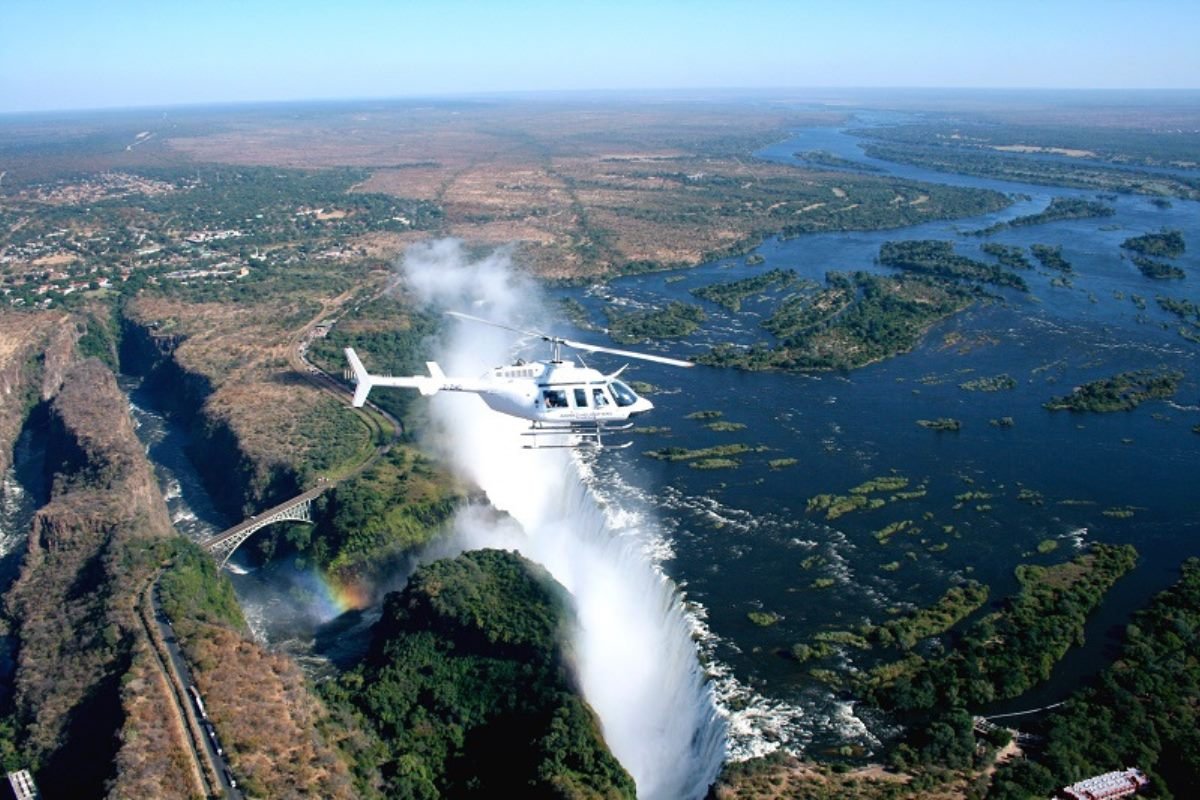
Peak flow does come with trade-offs: spray can obscure distant views, and some water-based activities are restricted while currents are at their strongest. For many first-time visitors, though, the full-flow spectacle is the defining Victoria Falls moment.
Best Time For Safari & Outdoor Activities
Victoria Falls sits within a wider region of rivers and national parks, and choosing dates for the falls alone can produce a very different trip from choosing dates for wildlife or river activities. A balanced itinerary usually accepts one trade-off — a less forceful waterfall in exchange for clearer skies and easier game viewing, or peak water flow with some river adventures unavailable.
Safari conditions near Victoria Falls
As vegetation dries and surface water becomes scarcer, wildlife concentrates around dependable water sources, making game drives more predictable from roughly July through September. Our Full Day Chobe Trip combines a river cruise and 4x4 game drive, and is at its most reliable for sightings during these drier months.
Best months for white-water rafting
White-water rafting is usually best considered during lower-water periods, typically from around August through December, when selected rapids and sections of the Batoka Gorge are accessible. Our white-water rafting trip runs through this demanding stretch of the Zambezi, so check current operating conditions before booking specific dates.
Best months for Devil’s Pool
Devil’s Pool is a seasonal experience tied to lower water levels, generally available from around mid-August into January, though dates shift with river conditions and safety assessments. Our Livingstone Island experience includes Devil’s Pool access in season as part of a guided breakfast or lunch visit — never attempt it outside an authorized, guided operation.
Visiting Victoria Falls Month By Month
A month-by-month view makes the seasonal pattern easier to use in practice.
| Travel period | Typical conditions | Main advantage | Main trade-off |
|---|---|---|---|
| January–March | Warm, wet, increasingly lush | Green scenery, rising flow | Rain and mist can limit views |
| April–June | Warm, high water, heavy spray | Powerful waterfall spectacle | Some river activities close |
| July–September | Drier, clearer, comfortable | Sightseeing, photography, safari | Popular dates fill quickly |
| October–December | Hot, lower water, early rains | Clear gorge views, rafting, Devil’s Pool | Heat and reduced flow |
The table is deliberately broad because conditions vary by year — but it shows why the best dates for the falls themselves aren’t automatically the best dates for every activity.
Choosing The Best Time Based On Your Priorities
There’s no single winning month for every visitor. Someone chasing the loudest roar may happily accept wet clothes, while a family may prefer easy paths and predictable sightseeing.
- First-time visitors: February–May for the classic full-flow “Smoke That Thunders” experience, or July–September if clear panoramas matter more than volume.
- Photographers: March–May for dramatic mist and rainbows, August–October for panoramic, geological detail.
- Families: July–September for drier paths, clearer viewpoints and manageable heat.
- Adventure travelers: August–December for rafting and Devil’s Pool, keeping one land-based waterfall day available regardless.
Planning Your Victoria Falls Itinerary
A good itinerary gives the falls room to breathe. Most visitors need more than a quick lookout stop to appreciate the viewpoints, river setting and surrounding activities — especially if adding a safari or crossing a border.
How many days to spend at the Falls
Two full days is a comfortable starting point: one day for the main viewpoints, another for a river activity or a slower return to favorite lookouts. Add a third day for a Chobe day trip or a weather buffer — see our full activities & day trips page to build out the rest of your visit.
Booking activities around seasonal conditions
Reserve high-demand, water-dependent activities after checking their operating season. For rafting, Devil’s Pool, river cruises and scenic flights, ask whether the experience is water-level dependent and what happens if conditions change. If you want to extend beyond the Falls, our Botswana safari packages and multi-day tours both connect naturally from Victoria Falls without adding unnecessary transit days.
Frequently Asked Questions
Related Topics