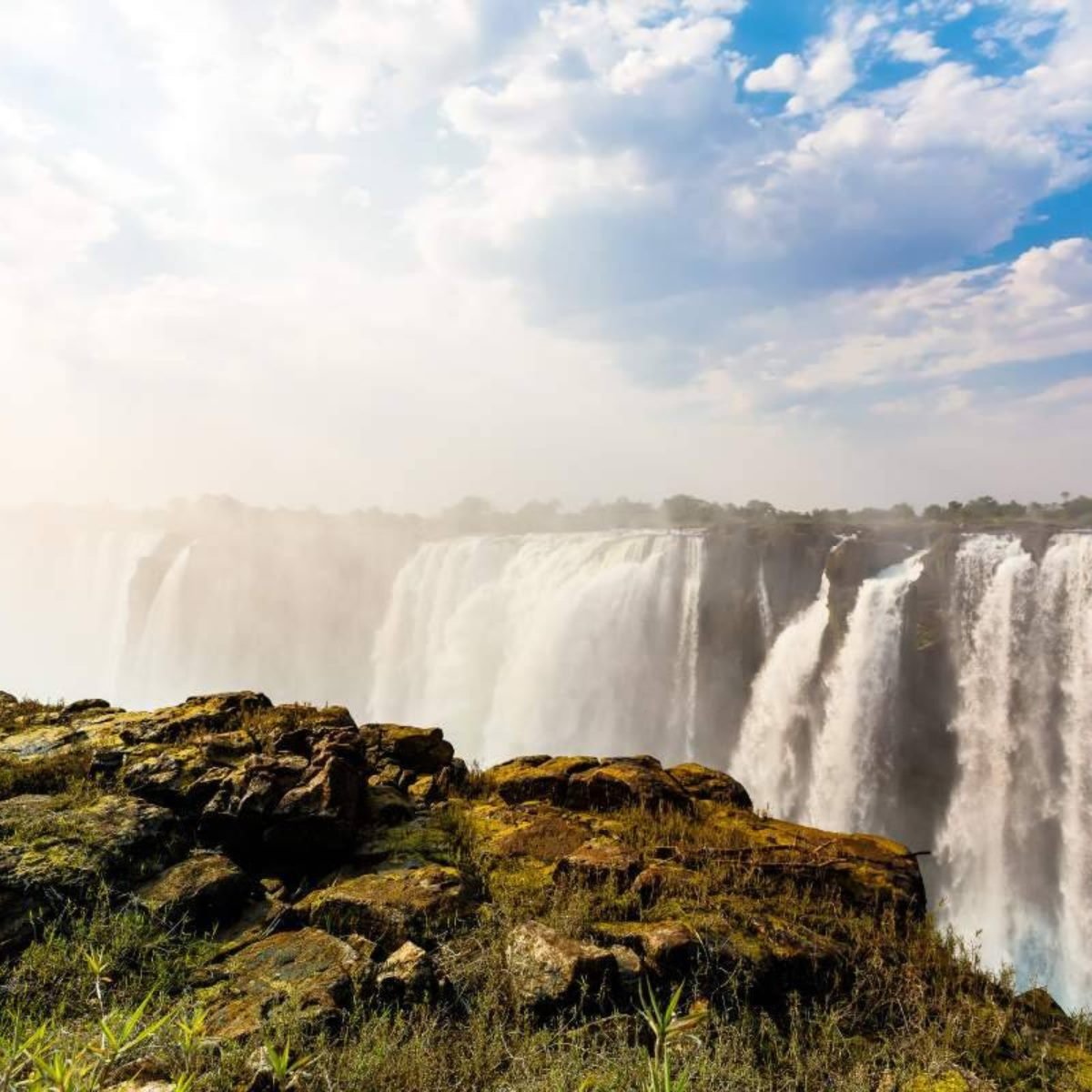
Quick answer: Victoria Falls sits on the Zambezi River on the border between Zimbabwe and Zambia in southern Africa, next to the towns of Victoria Falls (Zimbabwe) and Livingstone (Zambia). It drops 108m and stretches 1,708m wide — the largest sheet of falling water on Earth. Most first-time visitors base themselves in Victoria Falls, Zimbabwe, which has the better overall viewpoints and the easiest onward access to Botswana’s Chobe National Park.
On This Page
Where Exactly Is Victoria Falls?
Victoria Falls is on the Zambezi River, on the border between northwestern Zimbabwe and southern Zambia, in southern Africa. It sits close to the point where Zimbabwe, Zambia, Botswana and Namibia’s Caprivi Strip all converge — which is exactly why it pairs so naturally with a Chobe National Park safari in Botswana as a single trip.
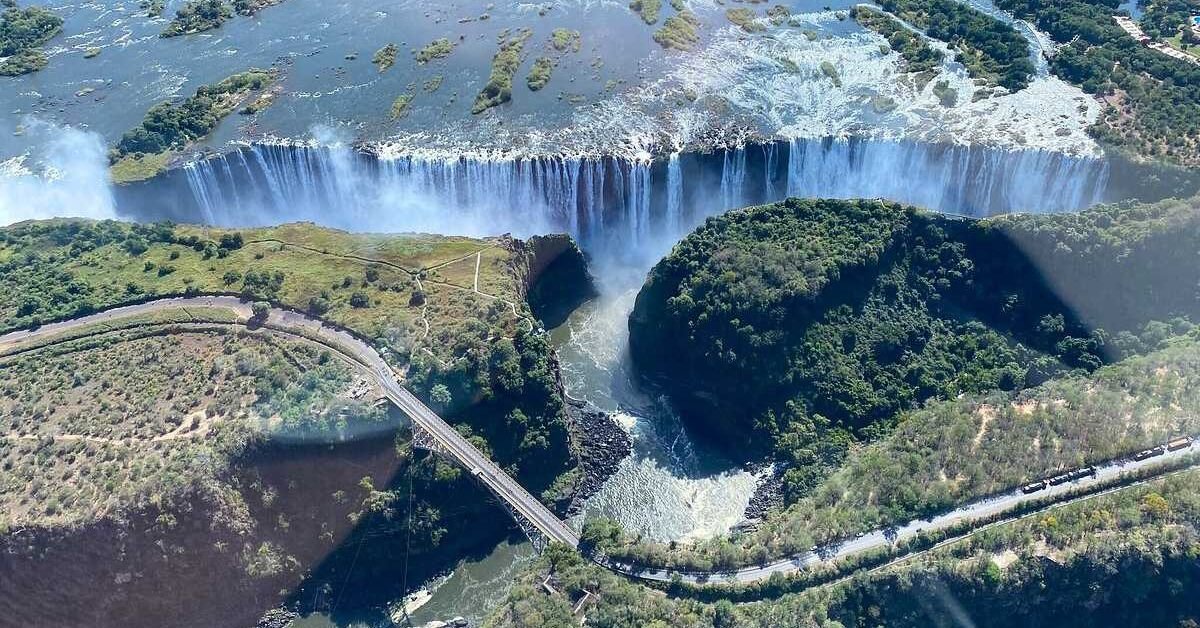
The two closest towns are Victoria Falls, Zimbabwe and Livingstone, Zambia, about 10km apart and connected by the historic Victoria Falls Bridge. Both have their own international airports (Victoria Falls Airport and Harry Mwanga Nkumbula International Airport), so which one you fly into usually comes down to which side of the Falls you want to be based on.
Zimbabwe Side Or Zambia Side?
The Falls themselves straddle the border, and each side shows you something different:
- Zimbabwe side: roughly 75% of the main waterfall face is visible from here, with the most dramatic, front-on viewpoints along the rainforest walking trail — the side most first-time visitors choose.
- Zambia side: closer, wetter viewpoints (expect to get soaked in high-water season), plus access to Devil’s Pool via Livingstone Island during the low-water months.
- The KAZA UniVisa covers both Zimbabwe and Zambia on one visa, so most travelers simply visit both sides rather than choosing — it’s a short walk across the bridge.
For the full breakdown of what you’ll actually see and do, our guided Falls tour covers the rainforest walk and all the main viewpoints in a single half-day.
Key Facts: Size, Height & Width
108 meters (354 feet) — roughly twice the height of Niagara Falls.
1,708 meters (1.7km) — the widest curtain of falling water in the world.
Mosi-oa-Tunya — “The Smoke That Thunders”, visible from kilometers away in high-water season.
No other waterfall on Earth matches both that height and that width at once — which is why Victoria Falls is recognized as the largest sheet of falling water in the world, even though a handful of other falls are individually taller or carry more water volume. It’s also been a UNESCO World Heritage Site since 1989, protecting the rainforest microclimate the spray itself sustains.
How Victoria Falls Was Formed
The Falls exist because the Zambezi River crosses a wide basalt plateau cut through with deep cracks. Over millions of years, the river has worn each crack into a new gorge and waterfall, then gradually cut back through it until the water found the next crack upstream and jumped to a new edge — leaving a zig-zagging series of abandoned gorges behind it, visible today below the current Falls. The waterfall you see now is simply the most recent edge of that ongoing process; geologists expect it to keep migrating upstream over the next tens of thousands of years.
Who Discovered Victoria Falls?
Scottish missionary and explorer David Livingstone became the first European to see the Falls in 1855, naming them after Queen Victoria. Long before that, local Kololo and Tonga communities already knew them as Mosi-oa-Tunya, and that name remains in everyday use on both sides of the border today — it’s the official name of the national park on the Zambian side.
Getting To Victoria Falls
Most international visitors fly into Victoria Falls Airport (Zimbabwe) or Livingstone (Zambia), both served by regional connections through Johannesburg. From there, it’s a short transfer to town, and a further road transfer of around 80km / 1.5–2 hours (including the Kazungula border crossing) if you’re continuing on to Chobe National Park in Botswana — see our transfers page for routes and pricing.
Not sure which side to fly into or how to build the rest of your trip around it? Our guide to choosing the right Victoria Falls trip walks through it by budget and trip length, and you can always send us your dates for a tailor-made route.
Frequently Asked Questions
Related Topics