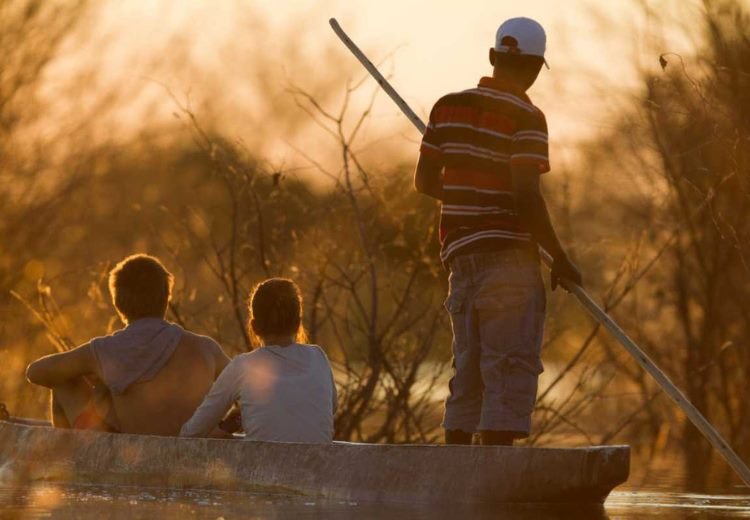
Quick answer: The Okavango Delta is in northern Botswana. The Okavango River rises in Angola's highlands, crosses Namibia's Caprivi Strip, then fans out across the Kalahari sand instead of reaching the sea — one of the few major inland deltas on Earth. In a big flood year it can spread across roughly 15,000 square kilometers, and that flood typically peaks during Botswana's dry season, not its wet one. You can explore it by mokoro canoe on our 9-Day Victoria Falls & Okavango Delta safari.
On This Page
Where Exactly Is It?
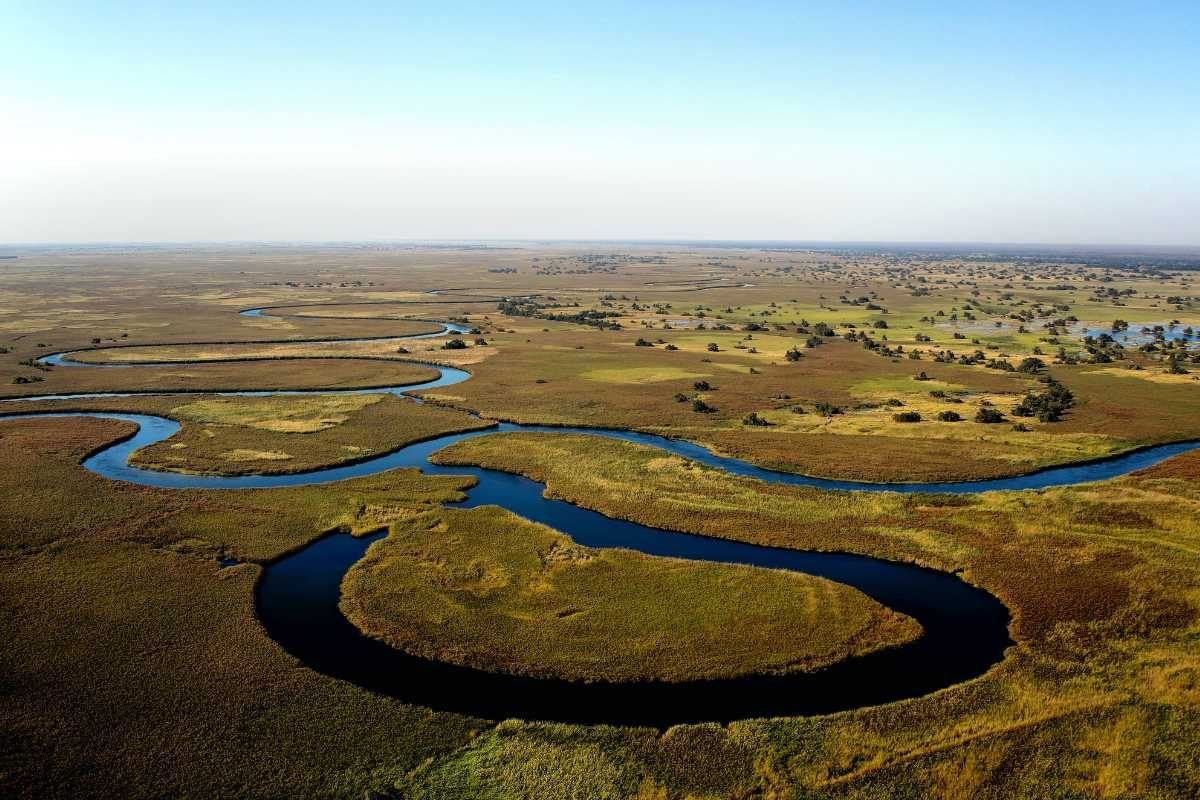
The Okavango Delta sits in northern Botswana, not far from where Botswana, Namibia, Zambia and Zimbabwe all nearly touch. It's fed by the Okavango River, which starts life hundreds of kilometers away in the highlands of Angola, picks up more water crossing Namibia's thin Caprivi Strip, and then does something most rivers never do: instead of reaching the ocean, it spreads out across the flat sands of the Kalahari Desert and simply disappears into evaporation and the ground.
How Big Does It Get?
The honest answer is: it depends entirely on when you ask. In a strong flood year, the Delta can spread across roughly 15,000 square kilometers of channels, lagoons, reed beds and palm-studded islands. In drier months, or drier years, that footprint shrinks noticeably before the next flood arrives to top it back up. This is also why no two visits to the Okavango look quite the same — the "map" of the Delta is a seasonal event, not a fixed shape.
Why A River Just... Stops
Most deltas form where a river meets a sea or lake and dumps its sediment at the boundary. The Okavango has no such boundary to meet. It flows into a shallow, flat basin created by tectonic faulting linked to the same geological system behind East Africa's Rift Valley, and because that basin has nowhere lower to drain to, the water simply spreads out, slows down, and is gradually lost to evaporation and the thirsty Kalahari sand beneath it. The result is one of the only major inland deltas in the world — a true delta that never reaches an ocean, which is either a geological curiosity or nature quietly admitting it ran out of plan.
The Flood That Arrives In The Dry Season
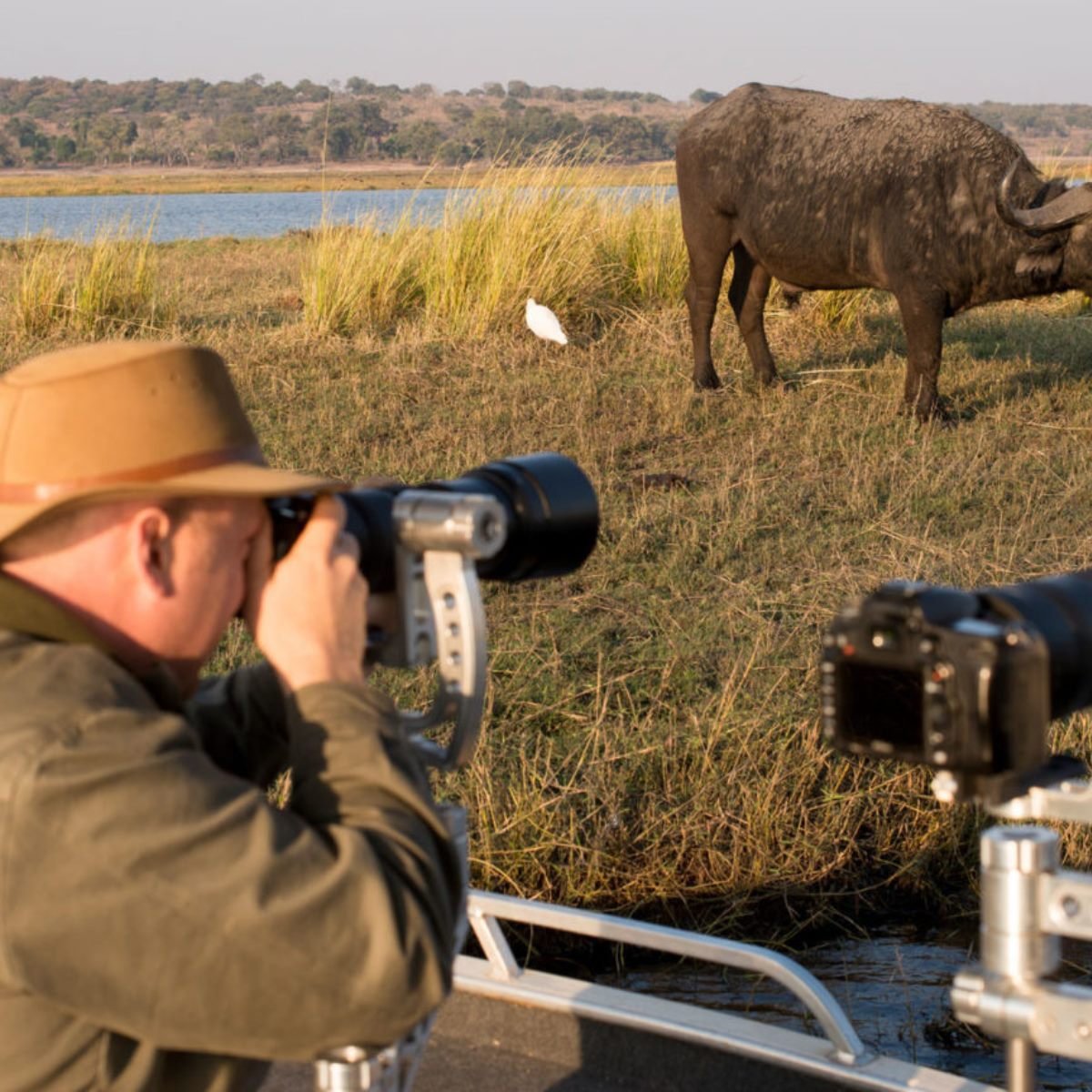
Here's the detail that trips up most first-time visitors: the Delta's floodwater doesn't come from local rain. It falls as rain in the Angolan highlands during that region's wet season, then takes several months to travel downstream and spread across the flat Delta basin. By the time it arrives in Botswana, the local dry season (roughly June to September) is already underway — so the Okavango is often at its fullest, most water-rich state exactly when the surrounding bush is driest and wildlife is most reliant on it. That overlap is a large part of why game viewing in the Delta during these months is so reliably good.
Want to actually get out on that water rather than just look at a map of it? Our guide to what a mokoro is explains how you get around the Delta once you're there, and our 9-Day Victoria Falls & Okavango Delta safari combines the Falls with a proper Delta stay. Send us your dates and we'll check what the flood is doing when you'd be traveling.
Frequently Asked Questions
Related Topics