Quick answer: A mokoro is the traditional dugout canoe used to navigate the Okavango Delta's shallow channels, poled along from the stern rather than paddled. Most used today are fiberglass replicas built to the same low, narrow shape, to spare the Delta's big hardwood trees. It's quiet, it's slow, and it's the only way to reach parts of the Delta no motorboat ever will. You'll ride one on our 9-Day Victoria Falls & Okavango Delta safari.
On This Page
What Is It, Really
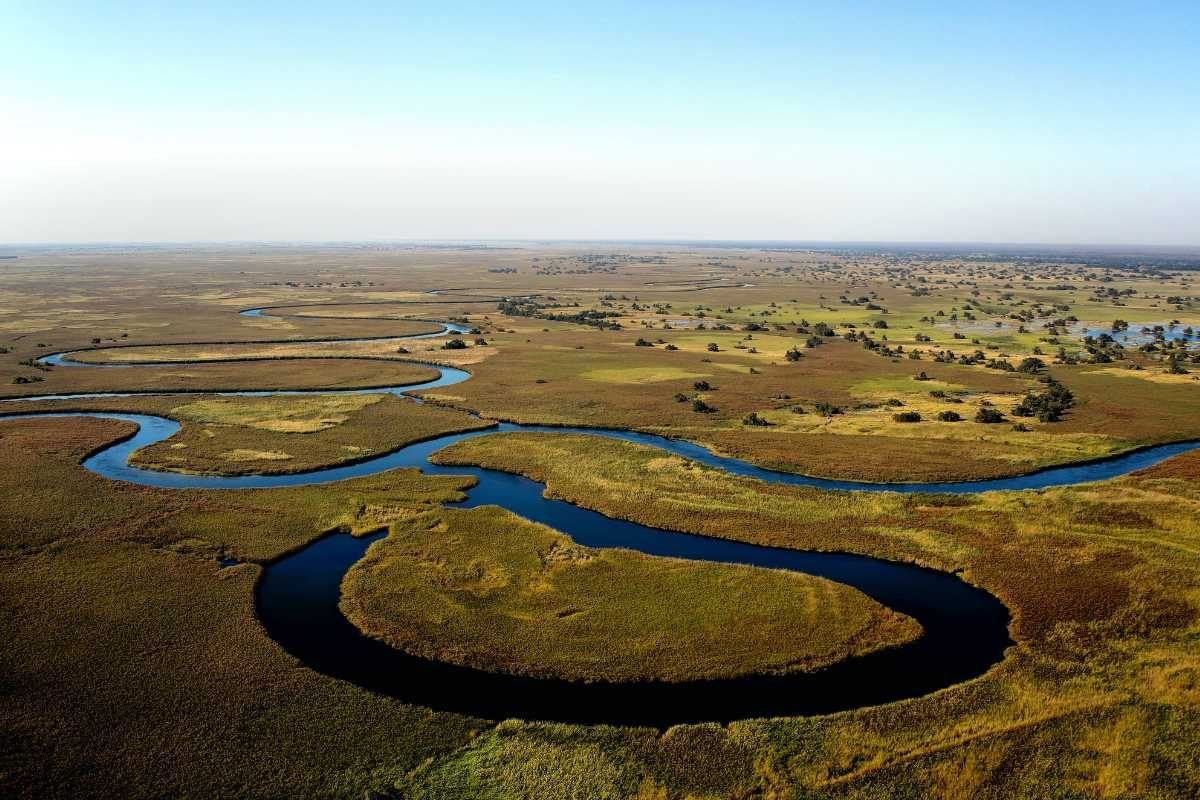
A mokoro (plural: mekoro) is a narrow, low-sided canoe, traditionally carved from a single hardwood log — usually jackalberry or sausage tree — by communities who've lived around the Delta for generations. It's the original vehicle for a place where roads simply don't work: reed-choked channels, floating papyrus, and water too shallow for anything with a motor and too deep to just wade through.
Most mekoro used by camps and lodges today are fiberglass, built to the exact same shape and proportions as the traditional wooden version. This isn't a budget cut corner — it's a conservation one. Carving a traditional mokoro takes a mature hardwood tree that can be centuries old, and the Delta's ecosystem can't sustain that demand at modern visitor numbers. The experience of riding in one is identical either way.
Why Pole Instead Of Paddle
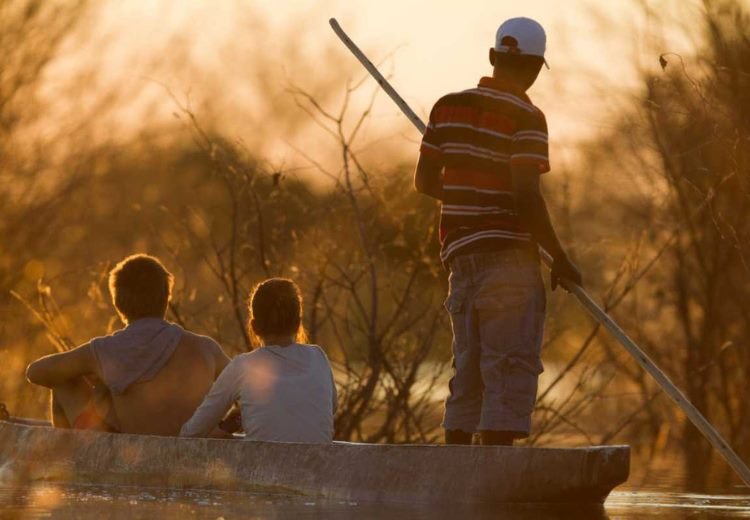
The poler stands at the back of the mokoro and pushes it forward with a long wooden pole, planting it against the muddy riverbed and shoving off — closer to punting a gondola than paddling a canoe. This works because Okavango channels are often shockingly shallow, sometimes under a meter deep, which would make a normal paddle stroke useless but gives a standing poler exactly what they need: solid ground just beneath the surface, every single stroke.
It also happens to be nearly silent. No engine hum, no splashing paddle rhythm — just water moving past the hull and reeds brushing the sides. That's not an aesthetic choice either; it's why you'll glide past grazing lechwe antelope, wading elephants and the occasional hippo without them so much as looking up.
Is It Safe?
Yes. Polers grow up on this water, know every channel, sandbank and hippo pod by name (sometimes literally), and mekoro themselves sit low and stable — they're built for calm, shallow water, not rapids. The main rule of a mokoro safari is the same as most good safari rules generally: do what your guide says, when they say it, particularly around hippos, which are a genuinely serious animal to give space to and the reason your poler is scanning the water constantly, not just admiring the scenery.
What It's Actually Like
Low, slow, and quiet, in the best possible way. You sit just above the waterline, close enough to the reeds to see dragonflies land on them, while your poler reads a landscape you'd otherwise glide straight past. Most mokoro excursions run an hour or two at a time, often paired with a guided walk onto one of the Delta's islands — which is how you end up seeing elephants from the water and on foot in the same morning.
Mokoro rides are included as part of our 9-Day Victoria Falls & Okavango Delta safari, and feature across most of our Delta-inclusive itineraries on the multi-day tours page. Send us your dates and we'll build the right one around how much time you want on the water versus on game drives.
Frequently Asked Questions
Related Topics