Quick answer: Yes, self-driving Namibia is safe for confident drivers who plan properly — the roads are well-maintained gravel, traffic is minimal, and the real risks are fatigue and underestimating distance, not crime or wildlife. A 4x4 is recommended for remote routes. If you'd rather not navigate it yourself, a guided circuit covers the same ground with a local expert driving. Both are real options on our Namibia tour packages, from $100–$180pp/day self-drive.
On This Page
Is It Actually Safe?
Yes, genuinely. Namibia has one of the best gravel-road networks in Africa — well-graded, well-signed, and lightly trafficked enough that the "dangerous roads" worry most first-timers bring with them turns out to be misplaced. Violent crime against tourists is rare and concentrated in a handful of urban areas most self-drive routes never pass through. The actual risks are more mundane: driving tired after a long day, misjudging gravel at speed on a corner, or running low on fuel between towns that are further apart than they look on a map.
Do You Need A 4x4?
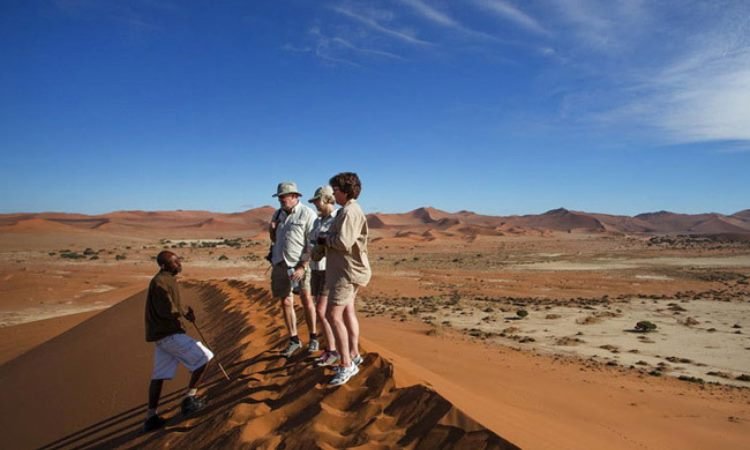
Depends on the route. The main gravel roads connecting Windhoek, Sossusvlei and Swakopmund are graded well enough that a sturdy 2x4 handles them fine in dry conditions. Push further — the Skeleton Coast, the final deep-sand stretch toward Deadvlei, or anywhere off the signed main routes — and a 4x4 stops being optional. Most self-drive rental agreements for Namibia default to 4x4 anyway, simply because it covers every itinerary without a mid-trip vehicle swap.
The Distances Nobody Warns You About
Namibia is roughly the combined size of France and Germany, with a population smaller than either city's metro area. That space is exactly what makes the scenery extraordinary and exactly what trips up itinerary planning. Driving days of 4-6 hours between stops are completely normal, not a sign something's gone wrong with your route. Trying to cram in one extra stop "because it's not that far on the map" is the single most common way a Namibia self-drive trip goes from relaxed to exhausting.
Self-Drive Or Guided: How To Choose
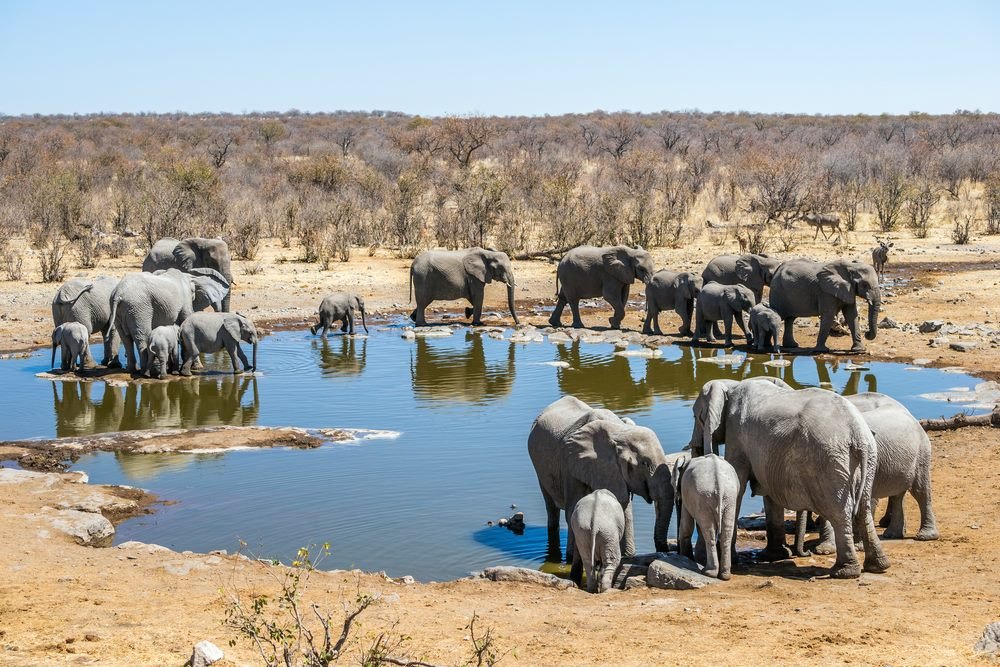
Self-drive suits travelers who want flexibility, a lower daily cost, and don't mind being the one reading the map. A guided circuit suits travelers who'd rather hand navigation, timing and wildlife-spotting to someone who already knows exactly where that leopard tends to sleep at 4pm. Neither is the "serious" option and neither is the "lazy" one — they're just different trips. Our Namibia tour packages run both: self-drive from roughly $100–$180 per person per day, guided mid-range circuits from $250–$400, with the Namibia Desert Sossusvlei Explorer as a solid starting point if you want someone else holding the map.
Planning to combine Namibia with Victoria Falls or a Botswana safari? That part of the trip works differently — see our honest take on whether you can self-drive a Botswana safari before you assume the same approach carries over.
Frequently Asked Questions
Related Topics